*****Please Visit My Youtube Channel ComputerTechies_Rstvarthi for Engineering Entertainment Educational Filmy shorts.*****
In the year 2023 the government approved the construction of the Laser Interferometer Gravitational-Wave Observatory (LIGO) project after seven years of in-principle approval.It will be built by the Department of Atomic Energy and the Department of Science and Technology with the U.S. National Science several Foundation and national and international research institutions.
What is LIGO-India Project?
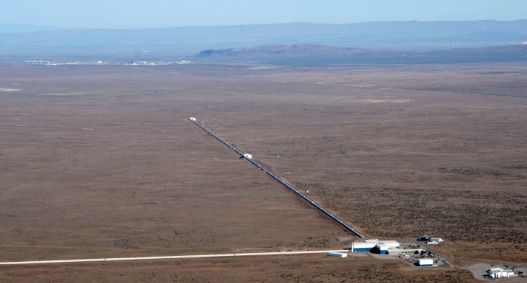
The project aims to detect gravitational waves from the universe. The Indian LIGO would have two perpendicularly placed 4km long vacuum chambers, that constitute the most sensitive interferometers in the world. It is expected to begin scientific runs from 2030.This Laser Interferometer Gravitational-Wave Observatory is a large-scale observatory designed to detect cosmic gravitational waves thus using these waves as astronomical tools.
Being very sensitive instrument , LIGO will detect a change in distance of 10−17 cm over the length of the arm. Coming from many source like thermal noise, minute fluctuations in electrical current, and even small seismic disturbances caused by wind. Thus, two installations are required to make a solid detection.
Where is it Located ?
It will be located in the Hingoli district of Maharashtra, about 450 km east of Mumbai. Purpose and Significance: It will be the fifth node of the planned network and will bring India into a prestigious international scientific experiment. It will make India a unique platform that brings together the frontiers of science and technology of the quantum and the cosmos.
Benefits of LIGO-India:
The LIGO-India project would have several spin-off benefits to Indian science, apart from making India an integral part of one of the most prestigious international scientific experiments.
The observatory is expected to enable dramatic returns in astronomy and astrophysics, as well as leapfrog Indian science and technology in cutting-edge frontiers of great national relevance.
What are Gravitational Waves?
Gravitational waves were first postulated (1916) in Albert Einstein’s General Theory of Relativity, which explains how gravity works. These waves are produced by the movement of massive celestial bodies, such as black holes or neutron stars, and are the ripples in space time that propagate outward.
What is LIGO? About:
LIGO is an international net- work of laboratories that detect gravitational waves. LIGOS are designed to measure changes in distance that are several orders of magnitude smaller than the length of the proton. Such high precision Instruments are needed because of the extremely low strength of gravitational waves that make their detection very difficult. You can find many blogs and Posts on this observatory for further reference.
First Detection Gravitational Waves:
The LIGO in the US first detected gravitational waves in 2015, which led to a Nobel Prize in Physics in 2017. These detectors made the first observation of gravitational waves. The black holes were 36 and 29 times the mass of the Sun and formed a new black hole 62 times the mass of the Sun 1.3 billion years ago.
Black hole mergers are the some of the strongest gravitational waves. During such merge , three solar masses were converted into energy in gravitational waves; the amount of power radiated was 50 times more than all the starts shining in the universe in that moment.
Operational LIGO:
Besides the United States (in Hanford and Livingston), such gravitational wave observatories are currently operational in Italy (Virgo) and Japan (Kagra).To detect gravitational waves, four comparable detectors need to be operating simultaneously around the globe.
Working Mechanism:
LIGO consists of two 4-km- long vacuum chambers, set up at right angles to each other, with mirrors at the end. When light rays are released simultaneously in both chambers, they should return at the same time.
However, if a gravitational wave arrives, one chamber gets elongated while the other gets squished, causing a phase difference in the returning light rays. Detecting this phase difference confirms the presence of a gravitational wave.